
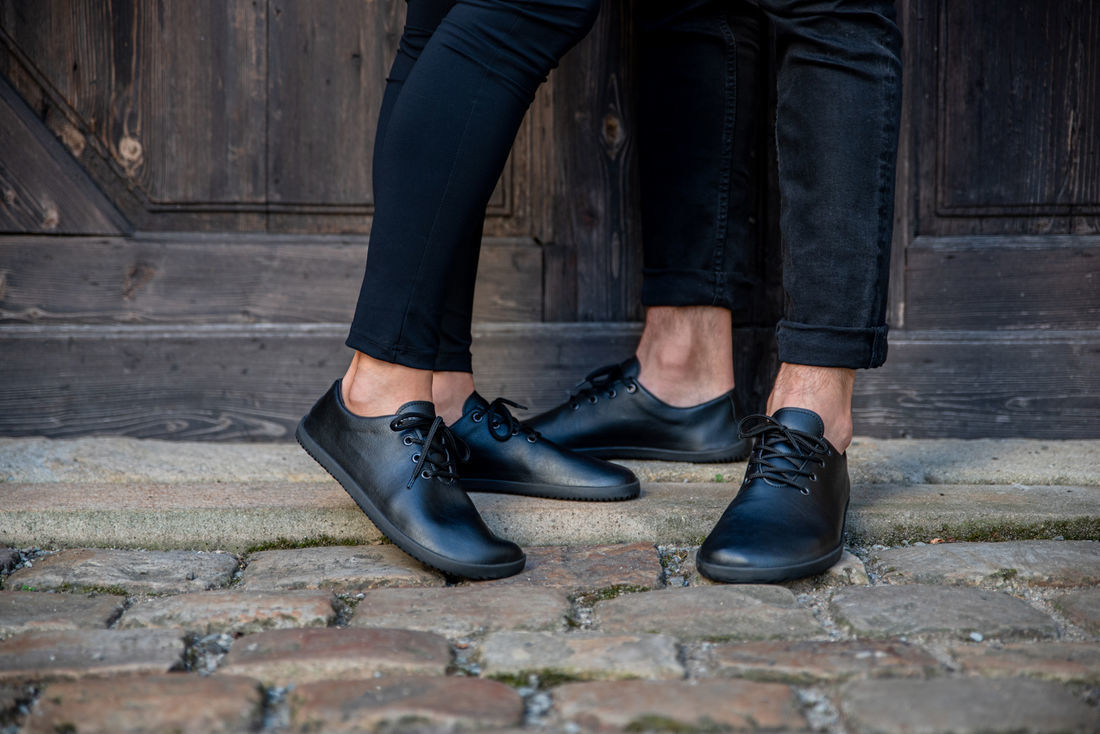
Transitioning to functional footwear or reducing your reliance on orthotics doesn’t have to feel intimidating. In fact, with a slow and thoughtful approach, your feet can steadily regain their natural strength, mobility, and awareness — all while staying comfortable and supported.
Many people are surprised to learn that scientific research is beginning to catch up with what clinicians see every day. Studies now show that foot-shaped shoes and minimalist footwear can increase intrinsic foot muscle size, improve balance, and support more natural foot posture, as long as the transition is gradual and sensible.
In other words: your feet are adaptable — they just need time.
Let’s break down how to make the switch without stress or overwhelm.
1. Begin With Foot-Shaped Shoes
Before changing anything else, start by choosing shoes that respect the natural shape of the human foot.
Look for:
• A wide toe box (your toes shouldn’t be squeezed together)
• Zero drop (heel and forefoot on the same level)
• A flexible sole that bends and twists with your foot
Even this simple shift can wake up underused intrinsic muscles. Research shows that wearing shoes with a wider toe box can improve toe alignment and foot strength over 12–16 weeks when introduced gradually.
It’s a powerful first step — without being overwhelming.
2. Reduce Orthotics Slowly and Sensibly
If you’ve been in orthotics for many years, this part is essential.
Your feet need time to relearn how to manage load on their own. A safe approach is to:
• Wear your new functional shoes for short, comfortable periods without orthotics
• Alternate orthotic days with non-orthotic days
• Progress at a pace your body is comfortable with
Evidence suggests that a sudden removal of orthotic support can increase plantar loading before your feet are ready for it — but a phased reduction gives your tissues time to strengthen safely.
Slow is smart.
3. Add Simple Strengthening Exercises
Your transition will feel smoother and more stable when the foot muscles are doing their job.
A few daily exercises can make a huge difference:
• Toe spreading and “toe yoga”
• Short foot activation
• Slow calf raises with controlled lowering
• Gentle barefoot balance drills
Studies consistently show that intrinsic foot strengthening improves arch function, balance, and load tolerance — all key ingredients for comfortable movement in functional footwear.
You don’t need an hour a day.
You just need consistency.
4. Increase Barefoot Time Carefully
Barefoot time is helpful, but it shouldn’t be rushed.
A safe starting point is:
• 1–3 minutes indoors
• Add small increments each week
• Watch for signs of overload, like sharp pain or lingering soreness
Research on minimalist and barefoot transitions shows that gradual exposure reduces injury risk and helps tissues adapt naturally.
Listen to your feet — they’ll guide the pace.
5. Expect Adaptation, Not Perfection
As you transition, you may feel small aches or sensations you haven’t felt in years. This is often just your feet waking up muscles and movement patterns that have been dormant.
The transition shouldn’t feel painful or stressful.
If it does, your plan may simply need a small adjustment.
Progress isn’t linear — and that’s normal.
You Don’t Need to Do It Alone
The goal isn’t to rush into barefoot shoes or ditch your orthotics overnight. It’s about giving your feet the opportunity to function the way they’re designed to: strong, stable, responsive, and capable.
Every foot is unique — so is every transition.
If you’d like personalised guidance, support, or a structured plan to transition safely, I’d love to help.
Book an appointment or reach out to learn how I can help support your journey toward strong, naturally functioning feet.