
My Journey to Becoming a Functional Podiatrist
Part Four: Why I Became a Functional Podiatrist
Nearly 30 years after I first became a podiatrist, I practise very differently. Not because I believe everything I did before was wrong — but because I kept learning, questioning and changing.
In Part Three, I shared the period when I began exploring a different way of thinking about feet — discovering practitioners who helped me realise I wasn’t alone, experimenting with minimalist footwear myself, making mistakes and slowly beginning to understand the importance of strength, mobility, capacity and gradual change.
But learning these things personally was one thing.
Allowing them to change the way I practised professionally was another.
💪 Changing the Way I Practised
As I gradually transitioned my own footwear, strengthened my feet, improved my mobility and gave my body time to adapt, I could no longer separate what I was learning personally from the way I practised professionally.
So I changed.
I began looking at my patients differently.
I became increasingly interested in toe function, intrinsic foot strength, balance, mobility, sensory feedback and the relationship between the foot and the rest of the body.
Rather than looking only for what was “wrong” with a foot and how I could support or accommodate it, I also began asking:
What can this foot do?
What could we improve?
What might we be able to restore?
That didn’t mean every patient suddenly needed foot-strengthening exercises or minimalist shoes.
It meant I had another lens through which to look at the person in front of me.
🦶 There Is No One Right Answer
Perhaps one of the most important things I’ve learnt is that feet — and people — are incredibly individual.
Not every foot needs the same thing.
Foot strengthening may be useful for one person and inappropriate at a particular stage for another.
A flexible, foot-shaped shoe may give one person exactly what they need, while somebody else may benefit from more cushioning, stability or protection.
An orthotic may be unnecessary for one patient and extremely useful for another.
Pain, injury, arthritis, neurological conditions, structural changes, reduced sensation, balance concerns, activity demands and many other factors can influence what is appropriate.
So functional podiatry, to me, isn’t about replacing one rigid philosophy with another.
It isn’t about declaring orthotics “bad”, minimalist shoes “good”, or believing that every foot problem can be strengthened away.
It’s about having more options — and asking better questions.
👟 The Shoes Weren’t the Treatment
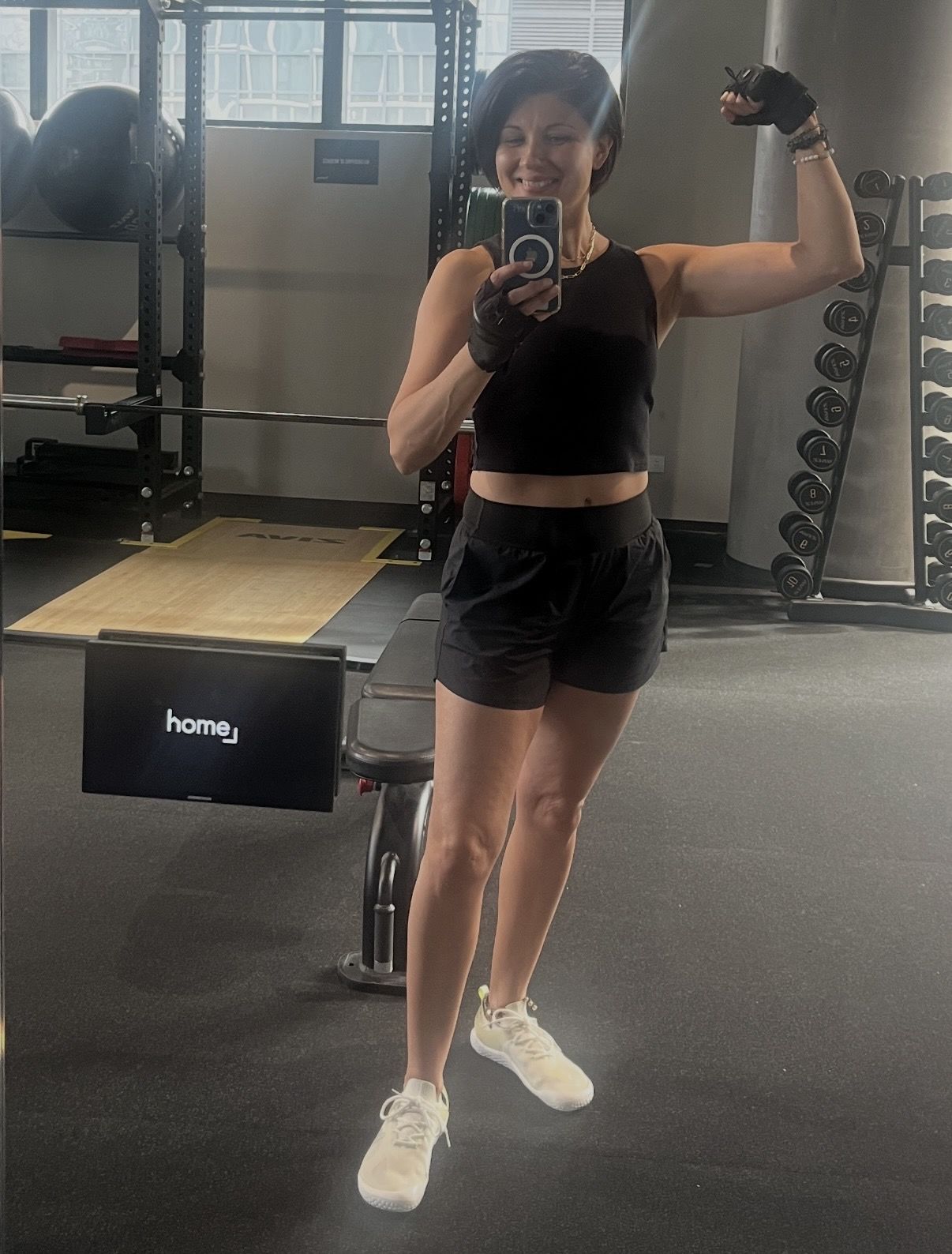
As my own journey continued, my feet became stronger. My body became stronger. My balance improved.
Even things I hadn’t initially connected with my feet — including the way I used my pelvis and pelvic floor — began to feel different as I became stronger and more connected to the ground.
Those were my experiences, not promises that everyone will have the same response.
And importantly, it wasn’t one miraculous pair of shoes that created those changes.
The shoes weren’t the treatment.
For me, they created more opportunity for my feet to move and work.
The work still had to be done — and the approach had to suit my body.
That distinction has become incredibly important in the way I speak to patients today.
There is no magical shoe.
There is no magical exercise.
And there certainly isn’t one solution that works for every person.
🌱 Returning to What Mattered to Me in the First Place
In many ways, this entire journey brought me back to something that had fascinated me long before I ever became a podiatrist:
Looking beyond the symptom and asking what may be contributing to it.
That idea is central to the way I practise today.
I want people to understand why something may be hurting rather than simply being told there is something wrong with them.
I want them to see their feet not automatically as faulty structures that need to be corrected, but as adaptable parts of the body that may have the potential to become stronger and more capable.
At the same time, adaptability has limits.
Sometimes the most appropriate goal is to improve strength and capacity.
Sometimes it’s to reduce pain.
Sometimes it’s to protect vulnerable tissue, improve stability or make everyday activities safer and more manageable.
And sometimes an orthotic, supportive shoe, medication, injection, surgery or another conventional treatment may absolutely be the appropriate option.
Support is not failure.
Functional podiatry, to me, isn’t about taking any of those options away.
It’s about making sure they aren’t the only options we explore — and that we don’t reject something simply because it is conventional either.
It’s about asking:
What can we improve?
What can we strengthen?
What can we restore?
What needs support or protection?
And what can this person ultimately learn to do for themselves?
The answers will be different for different people.
And that’s exactly the point.
💭 Changing Your Mind Takes Courage
Perhaps the greatest lesson this journey has taught me has nothing to do with feet at all.
Changing your mind takes courage.
There was a period when questioning the way I had practised felt almost like a crisis of professional identity.
If I believed something different now, what did that say about the orthotics I had prescribed?
The advice I had given?
The things I had confidently told patients over so many years?
Eventually, I realised I was asking the wrong question.
Nearly three decades in healthcare shouldn’t leave me thinking exactly as I did when I walked out of university at 22 years old.
It should change me.
Evidence evolves.
Our understanding evolves.
Our clinical experience grows.
Sometimes we have to be willing to look at something we’ve done for years and say:
Maybe there is another way.
That doesn’t invalidate everything that came before it.
And it doesn’t mean everything new is automatically better.
It means remaining curious, evaluating what we learn, acknowledging what we don’t know and being prepared to change when our understanding changes.
It means we’re still learning.
And I find that incredibly exciting.
✨ What Functional Podiatry Means to Me Today
Today, I describe myself as a functional podiatrist, and becoming one has been one of the most rewarding developments of my career.
For me, functional podiatry means looking at how someone’s feet function within the context of their whole body, their activities, their symptoms and their goals.
It means considering strength, mobility, balance, footwear, movement and load tolerance — while still recognising the value of diagnosis, conventional treatment and external support when appropriate.
It is not a promise that every foot problem can be solved through exercises or minimalist footwear.
It is not a rejection of orthotics, supportive shoes, medication, injections or surgery.
And it is certainly not a claim that one approach works for everyone.
It’s simply a broader way of looking at the person standing in front of me.
🤍 Nearly 30 Years Later
I still learn.
I still question.
I still change my mind.
And I certainly don’t pretend to have all the answers.
Along the way, I’ve found a wonderful community — both within podiatry and beyond it — of people who are passionate, curious, open-minded and willing to question established ideas.
Those are my people.
After nearly 30 years in this profession, I could easily have become comfortable doing things exactly as I had always done them.
Instead, I feel more curious than ever.
I love what I do.
I love the way I practise.
And I love seeing someone begin to understand their own body differently and realise that perhaps they aren’t as fragile as they thought they were.
There is still so much I don’t know and so much I want to learn.
Almost 30 years after that 22-year-old podiatrist took out her first loan, packed two suitcases and a drill into her car, and drove all over Melbourne saying yes to whatever work she could find, I still have that same desire to help people.
Perhaps now, though, I understand that desire a little differently.
I want to help people understand their bodies, make informed choices and find an approach that is safe, realistic and suited to them.
And somehow, after all these years, I have more fire in my belly for podiatry than ever.
For that, I feel incredibly blessed — and deeply grateful.
Thank you for following my journey.
If you’ve read Parts One through Four, thank you for taking the time to come along with me.
The way I practise will undoubtedly continue to evolve, because I hope I never stop being curious enough to ask questions.
After almost 30 years, I’m still learning — and I wouldn’t want it any other way.