
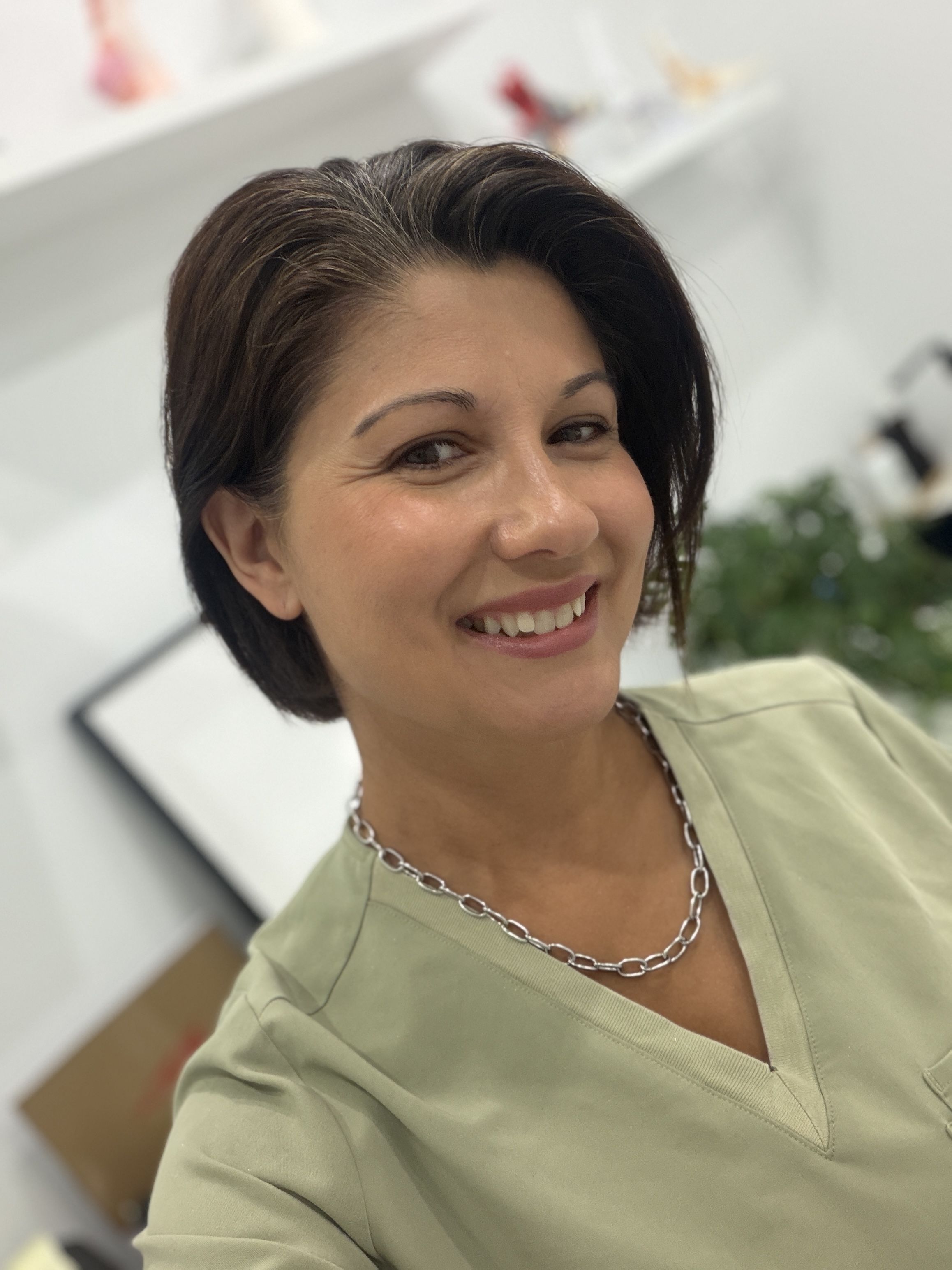
My Journey to Becoming a Functional Podiatrist
Part Three: The People and Ideas That Helped Me Find Another Way
Sometimes changing the way you think means being willing to become the beginner again.
In Part Two, I shared how my own experience of foot pain began to make me question some of the things I had accepted throughout my career — particularly the way I thought about orthotics, footwear and the capacity of the foot itself.
I didn’t suddenly decide that everything I had been doing was wrong.
But I had started asking different questions.
And once those questions were there, I wanted to understand more.
🌿 Going Back to an Old Idea
Interestingly, before I discovered podiatry as a teenager, I had been fascinated by naturopathy.
What appealed to me was the philosophy of looking beyond symptoms and asking why something was happening in the first place.
That idea had stayed quietly in the back of my mind.
So I started searching.
I read about foot strength, natural movement, toe function, sensory feedback, and barefoot and minimalist footwear.
Some of what I was reading challenged principles I had been taught at university and had spent years applying in practice.
That wasn’t easy to sit with.
I also realised that being open-minded didn’t mean accepting every new idea as fact. I wanted to remain curious without simply replacing one set of beliefs with another.
🤝 Realising I Wasn’t the Only One
Perhaps one of the most important things I discovered during this period wasn’t simply new information.
It was other people.
At times, questioning the way I had practised for so many years felt surprisingly lonely. There weren’t many people around me talking about these ideas then, particularly within Australian podiatry.
I remember wondering:
Am I completely wrong about this?
Am I the only one questioning it?
What does this say about everything I’ve been teaching people all these years?
And then, slowly, I began finding practitioners and communities who were asking many of the same questions.
One of the most important people for me early on was Andy Bryant, a fellow Australian podiatrist. Finding Andy’s work was enormously reassuring. Here was another podiatrist looking at feet through a different lens — thinking about function, movement, strength and footwear in ways that aligned with so many of the questions that had been forming in my own mind.
His work became a huge source of inspiration and, perhaps just as importantly at the time, comfort. It helped me realise that I wasn’t the only podiatrist thinking this way.
Through that world I also discovered The Foot Collective, founded by Canadian physiotherapist Nick St. Louis, and a wider community of practitioners exploring foot function, movement and the role our environment and footwear can play.
Then there was Gait Happens, founded by Dr Courtney Conley and now led alongside Dr Jenifer Perez. Their approach to looking at the foot as part of a whole functioning system, rather than in isolation, resonated enormously with me.
And I found Rina Harris, a functional podiatrist in London whose professional journey had some striking similarities to my own. She too had experienced foot problems that conventional approaches hadn’t resolved and had begun reconsidering the way she practised. Today, Rina also works with Gait Happens.
Finding another podiatrist who had gone through that process was incredibly validating.
These weren’t people I needed to agree with on absolutely everything.
What they gave me was something perhaps more important:
Permission to keep asking questions.
They showed me that there were other experienced health professionals looking at feet differently, challenging established ideas and continuing to learn.
Suddenly, I didn’t feel quite so alone.
👟 My First Pair of Barefoot Shoes
Eventually, reading and researching wasn’t enough.
I wanted to experience some of these ideas for myself.
So I bought a pair of very minimalist Vivobarefoot shoes.
And I went all in.
I think I was expecting some kind of magical barefoot moment.
I’d put them on, feel wonderfully free and connected to the ground, and perhaps there would be some heavenly light shining down as I discovered what my feet had apparently been missing all these years.
That is not what happened.
My calves ached.
The muscles down the front of my legs ached.
My lower back hurt.
My entire body seemed to be saying:
What on earth are you doing?
Not quite the barefoot awakening I’d imagined.
🦶 The Lesson I Had Completely Missed
What I hadn’t properly appreciated was that my body had spent decades adapting to conventional footwear.
I was accustomed to heel-to-toe elevation, cushioning and structure. Even shoes I had thought of as relatively “flat” weren’t necessarily flat.
Then I changed that environment almost overnight.
I hadn’t progressively strengthened my feet.
I hadn’t prepared my calves.
I hadn’t gradually increased my exposure.
I’d gone from years of one type of footwear to something dramatically different and expected my body to simply get on with it.
It taught me a lesson that now underpins much of the way I practise:
A more minimalist or “natural” shoe is not automatically better — and it doesn’t mean your body is immediately ready for it.
For some people, minimalist footwear may be comfortable and useful. For others, it may aggravate symptoms or simply not be appropriate.
Our history, strength, balance, medical conditions, activities and tolerance to load all matter.
And if someone does choose to transition their footwear, how they get there matters too.
😬 So I Put Them Away
After that first experience, I put the barefoot shoes away for a while.
If I’m honest, I think they frightened me a little.
But the questions hadn’t disappeared.
So I kept reading. I kept learning. And eventually, I decided to try again.
This time, I chose a less minimal, more transitional shoe.
More importantly, I changed my approach.
I gave my body time.
I worked on strength and mobility. I gradually increased my exposure and paid attention to how my body responded rather than assuming discomfort was something I simply needed to push through.
Slowly, things began to click.
The answer hadn’t been simply buying a different pair of shoes.
For me, it involved capacity, strength, mobility, awareness, progression — and time.
🔎 A Different Way of Looking at the Foot
That experience changed more than my footwear.
It changed the questions I was asking as a podiatrist.
The human foot is an extraordinary structure — 26 bones, 33 joints and an intricate network of muscles, tendons, ligaments and nerves.
It can move, adapt, sense the ground, absorb load and help propel us forward.
And I began wondering:
Why are we sometimes so quick to brace or restrict the foot rather than first exploring what it may be capable of?
When another part of the body becomes weak or dysfunctional, rehabilitation often involves strength, mobility and progressive exposure to load where appropriate.
I started wondering why I wasn’t always approaching the foot with that same mindset.
But I also came to understand something equally important.
Not every foot needs the same thing.
Pain, injury, arthritis, neurological conditions, structural changes, balance limitations and many other factors can make support or protection entirely appropriate.
The question wasn’t whether orthotics, supportive footwear or minimalist shoes were inherently “good” or “bad”.
The question was:
What is appropriate for the person standing in front of me?
That distinction became incredibly important to me.
🌱 Becoming the Beginner Again
Looking back, my disastrous first attempt at barefoot shoes was probably one of the best things that could have happened.
It humbled me.
It reminded me that knowledge doesn’t make us immune from getting things wrong.
And it taught me that changing an environment the body has adapted to over decades requires patience.
But this period also taught me something about community.
People like Andy Bryant, Rina Harris and the practitioners behind The Foot Collective and Gait Happens helped me feel that I wasn’t walking this path entirely on my own.
I looked up to them then, and I still have enormous respect for the people who are willing to remain curious, challenge their own thinking and share what they learn along the way.
They helped give me the confidence to continue exploring what functional podiatry might look like in my own practice, with my own patients.
I began looking at feet differently.
I began looking at shoes differently.
And eventually, I began looking at the way I practised podiatry differently too.
That would become the beginning of perhaps the biggest professional change of my career.
Next: Part Four — Why I Became a Functional Podiatrist